
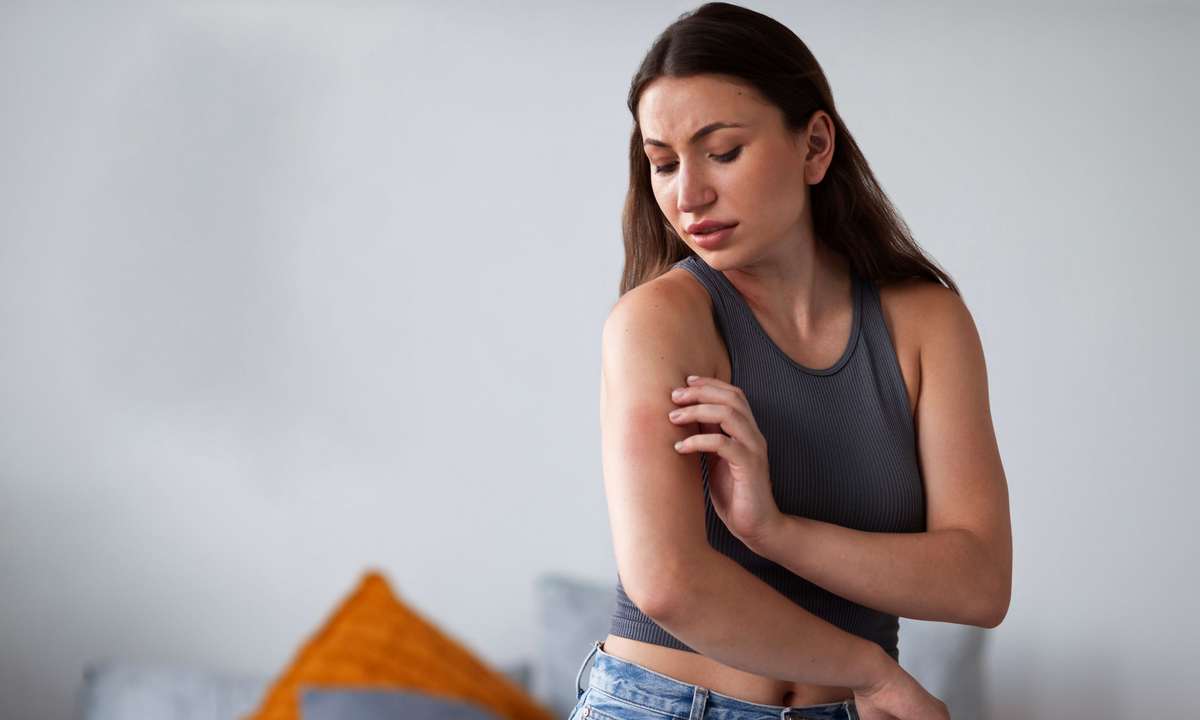
Psoriasis is a chronic, non-contagious skin disease that often raises many questions about body care, including whether it is possible to depilate with psoriasis. People with this diagnosis also want to have well-groomed, smooth skin, but at the same time they are afraid of exacerbations, irritations, and trauma to the affected areas. However, psoriasis is not a sentence and even with this disease you can pay attention to yourself and get rid of unwanted hair.
In this article, we will consider what psoriasis is, what are its skin manifestations, is it possible to do depilation with psoriasis, and also dwell in detail on how to perform sugaring with psoriasis and what the master should pay special attention to.
What is psoriasis and how does it manifest itself on the skin
Psoriasis is an autoimmune disease in which skin cells are renewed several times faster than normal. As a result, characteristic lesions appear on the skin surface.
The main skin symptoms of psoriasis:
- dry, reddened plaques;
- peeling, silvery-white scales;
- itching, tightness, sometimes burning;
- cracks, micro-damages to the skin;
- increased sensitivity.
Psoriasis has a wave-like course: periods of remission are replaced by exacerbations. This factor is key when making a decision about depilation. After all, during remission, when the skin feels calm, you can safely do procedures to remove unwanted hair, for example, sugaring.
Is it possible to do hair removal with psoriasis?
The answer to this question is not unambiguous, because it all depends on the stage of the disease and the condition of the skin, as well as whether the disease is currently in stable remission or in an exacerbation stage. If you have any doubts, it is always better to consult a dermatologist or a qualified hair removal master, who will objectively assess the condition of the skin and say whether sugaring can be done with psoriasis.
Depilation with psoriasis is possible if:
- the disease is in remission;
- there are no active psoriatic plaques on the skin in the depilation area;
- there are no cracks, bleeding areas, inflammation;
- the client has warned the master about the diagnosis.
Depilation with sugar paste or wax is prohibited if:
- there are active rashes and plaques;
- there is an exacerbation of psoriasis;
- the skin is severely damaged or inflamed.
In such cases, any depilation (both wax and sugaring) can cause the Koebner effect – the appearance of new psoriatic elements in places of skin injury.
Sugaring for psoriasis: the most gentle method
Among all hair removal methods, sugaring for psoriasis is considered the most delicate and safe, provided the right approach is taken.
Sugar paste has a natural composition, works at a comfortable temperature and minimizes the risk of burns and strong mechanical impact.
It is better to choose sugaring for psoriasis, because sugar paste does not stick to living skin, but only to hair. Sugaring has a minimal risk of injury, and less irritation and redness are recorded after it. Sugaring is suitable for sensitive skin in remission.
Important: even during remission, the master does not work on psoriatic plaques, but only on healthy or restored skin.
Wax depilationI and psoriasis: is it possible to perform the procedure?
Depilation with psoriasis with wax is possible, but is considered more traumatic compared to sugaring. Wax adheres more strongly to the skin, and abrupt removal can cause microdamage.
Waxing should be considered only on completely clean skin without manifestations of psoriasis, using soft, low-temperature waxes, with a highly qualified master. In many cases, clients with psoriasis are still recommended to prefer sugaring as a more gentle method of hair removal for skin diseases.
How a master should properly perform sugaring for psoriasis
For a master, working with a client who has psoriasis requires special care and an ethical approach. It is important to explain the possible risks to the client and not promise an ideal result, because skin with psoriasis can behave unpredictably.
Basic rules for working with a client with psoriasis for a master:
- Be sure to have the client fill out a questionnaire before the procedure, which should include a section on the presence of dermatological diseases.
- Before starting the procedure, conduct a visual examination of the skin without judgment or pressure and independently assess the condition of the skin in the sugaring area.
- Work with depilatory products and sugar paste for sugaring only on healthy areas of the skin.
- Use soft and natural sugar pastes. Yes, Enova, BioLife and Terra brand sugaring pastes are ideal for working with sensitive skin and in the presence of skin diseases.
- Make the minimum number of passes per area and perform thorough antiseptic treatment of the skin.
- After completing the procedure, apply a delicate soothing care without alcohols and acids.
Psoriasis is not a sentence for self-care, but it requires a conscious and careful approach. Depilation for psoriasis is possible only in the remission stage, with compliance with all safety rules. If the question arises whether it is possible to do sugaring with psoriasis, in most cases the answer is yes, but only if the skin is healthy and the procedure is performed professionally.